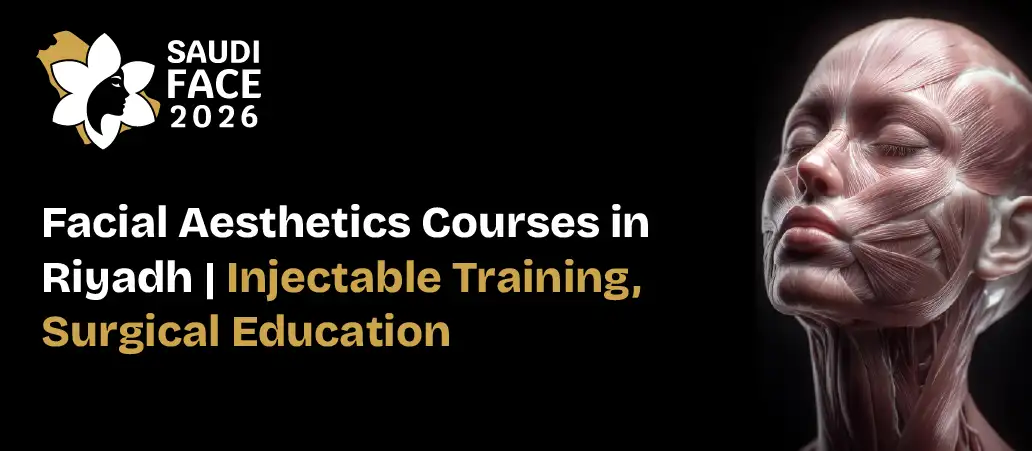
The demand for non-surgical and surgical clinical refinements is growing exponentially in the Gulf region, driving medical professionals to seek premier facial aesthetics courses to advance their expertise. From mastering neurotoxin precision to attending high-level surgical symposiums, continuing medical education provides practitioners with the cutting-edge insights required to deliver exceptional, safe, and natural-looking patient outcomes in today's highly competitive cosmetic market.
What Are Facial Aesthetics Courses? A Clinical Framework for Medical Specialists
Facial aesthetics courses represent specialized post-graduate educational programs designed exclusively for licensed medical professionals—including dermatologists, plastic surgeons, oral and maxillofacial specialists, and general practitioners. Rather than offering broad dermatological Overviews, these programs deliver a structured clinical framework focused on the precise anatomical, functional, and cosmetic enhancement of the human face.
At the core of any reputable curriculum is a comprehensive facial anatomy course. Medical practitioners must thoroughly understand the multi-layered structures of the face, including bone remodeling, deep and superficial fat pads, the superficial muscular aponeurotic system (SMAS), and complex neurovascular pathways. This anatomical mastery is critical for avoiding severe complications, such as intravascular injections or permanent nerve damage.
For practitioners seeking formal credentials, an aesthetic medicine certification validates their technical competence, ethical standards, and understanding of patient safety protocols. These educational frameworks bridge the gap between foundational medical school training and the highly nuanced, artful skill set required to excel in modern cosmetic practices.
Learn more about Saudi Face 2026 - the region's leading facial surgery conference
Types of Facial Aesthetics Courses — From Injectables to Surgical Masterclasses
The educational landscape of facial aesthetics is highly stratified, ensuring that clinicians can find training tailored specifically to their license type, scope of practice, and current level of expertise.
1. Non-Surgical and Minimally Invasive Training
These programs form the foundation of most aesthetic medicine courses. They focus primarily on office-based, low-downtime procedures that yield immediate or progressive results.
-
Neuromodulators & Dermal Fillers: Core training modules that teach the precise dosing, dilution, and placement of Botulinum Toxin type A and hyaluronic acid fillers for full-face rejuvenation.
-
Biostimulators & Thread Lifts: Advanced aesthetic medicine training covering collagen-inducing agents (like PLLA and CaHA) and minimally invasive suspension threads to address structural sagging without surgery.
2. Specialized Dental Aesthetics
The integration of facial esthetics in dentistry has revolutionized modern dental practices. Dental surgeons leverage their extensive knowledge of cranial anatomy to provide comprehensive smile makeovers, using therapeutic and cosmetic injectables to address issues like gummy smiles, bruxism, and perioral rhytids alongside traditional restorative work.
3. Advanced Surgical Masterclasses
For board-certified plastic surgeons, ENT specialists, and maxillofacial surgeons, a top-tier facial plastic surgery course is essential for mastering definitive structural transformations. These masterclasses dive deep into complex procedures such as:
-
Preservation and structural rhinoplasty.
saudiface.com
-
Deep-plane facelifts and neck lifts.
-
Blepharoplasty and brow lift modifications.
Explore the full Saudi Face 2026 agenda and rhinoplasty workshop schedule
How to Choose the Right Facial Aesthetics Course for Your Specialty
Selecting the appropriate educational pathway requires a strategic alignment of your medical background with the course's clinical depth. Practitioners should look for programs that offer a balance of evidence-based theory and rigorous practical training.
|
Course Component |
What to Look For |
Targeted Specialties |
|
Foundational Injectables |
High tutor-to-student ratios, live patient models, and emphasis on a comprehensive facial anatomy course. |
Dermatologists, Dentists, General Practitioners, Residents. |
|
Advanced Non-Surgical |
Training in ultrasound-guided injections and managing vascular occlusions. |
Experienced Aesthetic Physicians, Dermatologists. |
|
Surgical Masterclasses |
Programs that feature a hands-on cadaveric dissection aesthetics lab for real-tissue tactile feedback. |
Plastic Surgeons, Otolaryngologists (ENT), Maxillofacial Surgeons. |
Furthermore, ensure that the aesthetic medicine training program is formally accredited by relevant local and international governing bodies, such as the Saudi Commission for Health Specialties (SCFHS), to ensure your earned hours count toward license renewal.
Saudi Face Conference Riyadh — The Premier Facial Aesthetics Conference in the GCC
While traditional standalone workshops offer valuable isolated skills, the upcoming Saudi Face Conference (taking place October 30–31, 2026 in Riyadh, Saudi Arabia) represents the absolute pinnacle of aesthetic education in the region. As Riyadh rapidly emerges as a global powerhouse for medical tourism and clinical innovation, this premier 2-day event brings together the world’s leading physicians, researchers, and cosmetic pioneers.
Saudi Face 2026
The Saudi Face Conference sets a new gold standard by bridging the gap between non-surgical interventions and definitive surgical outcomes. The meticulously curated agenda focuses heavily on advanced 3D anatomical mastery, pioneering surgical innovations, and exploring the evolving frontiers of full-face rejuvenation. Attendees gain unprecedented exposure to international clinical philosophies, complex case analyses, and live-streamed demonstrations that are rarely accessible in standard regional workshops.
Saudi Face 2026+ 1
Read more: Saudi Face: The Leading Plastic Surgery Conference for Facial Aesthetics
Why Conferences Beat Standalone Courses: The Saudi Face Advantage
Enrolling in a standalone weekend workshop has its merits, but participating in a major medical symposium like the Saudi Face Conference offers multi-dimensional advantages that can drastically accelerate a practitioner's career trajectory.
-
Integrated Multi-Disciplinary Learning: Standalone aesthetic medicine courses often isolate treatments. The Saudi Face event showcases how non-surgical modalities seamlessly complement a facial plastic surgery course, teaching doctors how to combine surgical lifting with post-operative energy-based devices and injectables for flawless results.
-
Unmatched Cadaveric Dissection Opportunities: One of the crown jewels of the Saudi Face experience is its dedicated cadaveric dissection aesthetics programs. Practising complex techniques—such as advanced deep-plane facelifts or structural rhinoplasty—on high-fidelity cadaveric tissue provides an invaluable layer of safety and tactile mastery that plastic models simply cannot replicate.
saudiface.com
-
Networking and Global Insights: Conferences serve as elite hubs for peer-to-peer networking. Clinicians can interact directly with international faculty, discuss regulatory updates regarding aesthetic medicine certification pathways, and discover pioneering technologies before they hit the mainstream market.
International Conference Alerts
Learn more: The Ultimate Guide to Rhinoplasty Surgery: Techniques, Training & Global Standards for Surgeons
Conclusion — Elevating Your Facial Aesthetics Skills with the Right Event
Investing in your clinical education is the single most effective way to distinguish your practice in a crowded aesthetic market. While foundational aesthetic medicine courses provide the essential building blocks for everyday injectables, transitioning to comprehensive, conference-driven learning experiences elevates your practice from standard to exceptional.
By aligning your career goals with accredited training, mastering sub-SMAS anatomy via a dedicated facial anatomy course, and immersing yourself in world-class events like the Saudi Face Conference in Riyadh, you ensure that your clinical execution remains safe, cutting-edge, and strictly aligned with global standards of excellence.
register for Saudi Face 2026 in Riyadh — October 30–31, 2026
Frequently Asked Questions About Facial Aesthetics Courses for Medical Professionals
How do I get certified in facial aesthetics in Saudi Arabia?
To obtain a recognized aesthetic medicine certification or privileges to practice facial aesthetics in the Kingdom, you must hold a valid professional license from the Saudi Commission for Health Specialties (SCFHS). Practitioners must attend SCFHS-accredited aesthetic medicine training courses or complete dedicated residency/fellowship programs in dermatology, plastic surgery, ENT, or maxillofacial surgery. Continuous medical education (CME) hours from approved events like the Saudi Face Conference are also required to maintain and renew your license.
What is the difference between facial aesthetics and aesthetic medicine?
While the two terms frequently overlap in marketing, they have distinct clinical boundaries:
-
Aesthetic Medicine: A broad, overarching umbrella term that covers all non-surgical, minimally invasive cosmetic treatments across the entire body. This includes body contouring, sclerotherapy, laser skin resurfacing, and general hair restoration treatments.
-
Facial Aesthetics: A highly targeted subset of cosmetic medicine that focuses exclusively on the aesthetics, structural harmony, and rejuvenation of the head and neck. It ranges from non-surgical treatments like facial esthetics in dentistry to complex surgical reconstructions taught in an advanced facial plastic surgery course.
.png)
.png)
.png)
.png)
