A forehead lift can certainly address deep forehead lines, heavy brows, or a constantly tired appearance affecting facial harmony by elevating the brows, smoothing forehead wrinkles, and restoring a refreshed appearance. In this article, you will learn what a forehead lift is, how results are documented, what recovery involves, and why Saudi Face 2026 is becoming a leading destination for advanced facial aesthetic education.
What is a Forehead Lift?
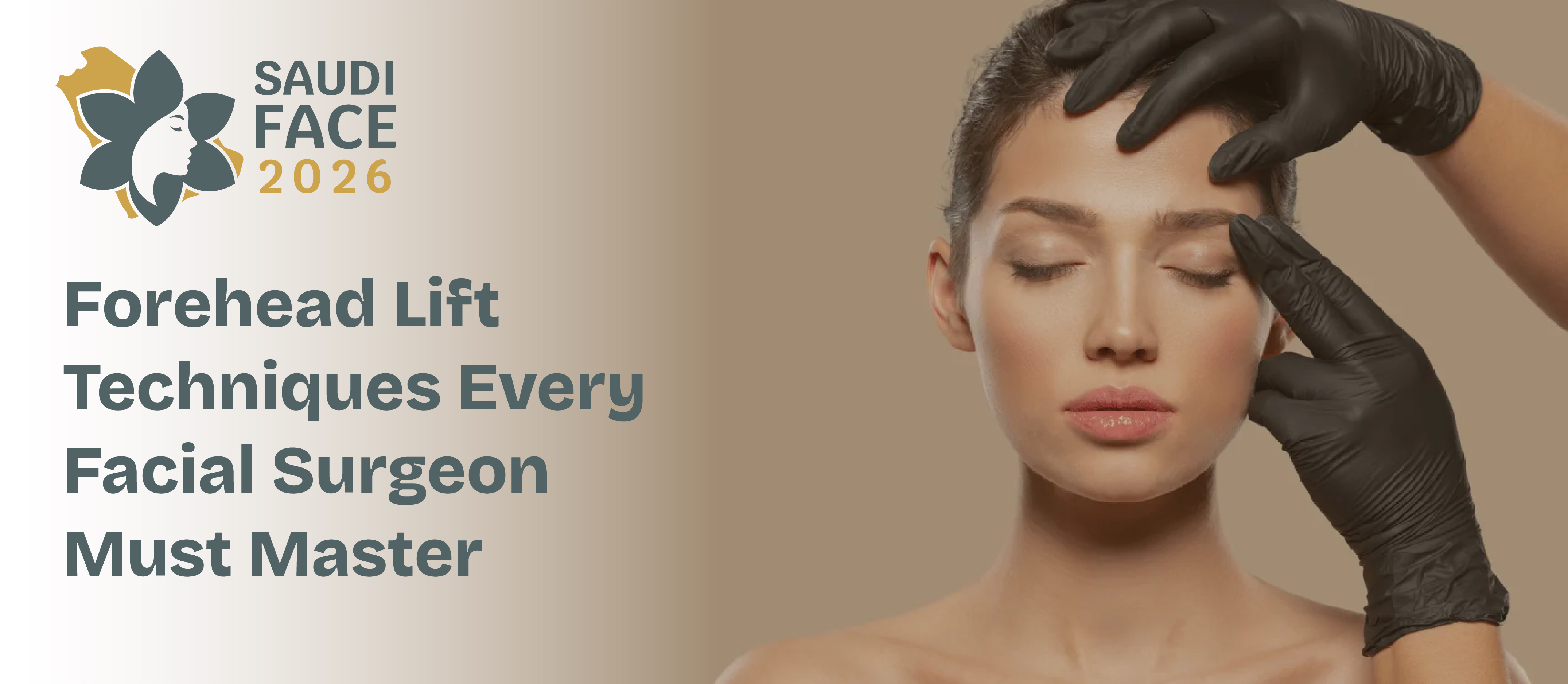
A forehead lift, also known as a brow lift, is a facial rejuvenation procedure designed to elevate the eyebrows and reduce visible signs of aging across the forehead and upper face.
When growing up, the skin gradually loses elasticity, and the soft tissues of the forehead begin to descend. Consequently, the brows may appear lower, forehead creases become more prominent, and excess skin can contribute to a tired or stern expression. A forehead lift directly addresses these changes by repositioning tissues and creating a smoother, more youthful contour.
Thus, surgeons typically perform a forehead lift using one of two primary techniques: the endoscopic approach or the traditional open method. The endoscopic approach uses small incisions and a camera to guide the surgeon while lifting and repositioning the brow, making it a less invasive option with quicker healing. The open technique, meanwhile, involves a longer incision across the scalp, which definitely allows for more dramatic correction in patients with significant sagging.
Learn more about Saudi Face 2026
Documentation Standards for Forehead Lift Before and After
When evaluating surgical outcomes, proper documentation is absolutely essential. Accurate photographic records provide valuable information for both surgeons and patients.
The term Forehead lift before and after refers to standardized photographs captured before surgery and throughout the healing process. These images allow objective assessment of surgical success while helping patients understand realistic expectations.
Professional documentation typically includes:
Standardized Photography
Images should be taken using:
-
Consistent lighting
-
Identical camera settings
-
Neutral facial expressions
-
Standardized patient positioning
-
Multiple viewing angles
This approach eliminates variables that may distort outcome evaluation.
Key Assessment Areas
During a forehead lift before and after analysis, surgeons commonly evaluate:
-
Brow position
-
Forehead wrinkle reduction
-
Symmetry
-
Hairline preservation
-
Scar visibility
-
Overall facial harmony
Importance of Long-Term Follow-Up
Immediate post-operative photographs rarely represent final results. In fact, meaningful Forehead lift before and after comparisons are generally conducted at:
-
1 month
-
3 months
-
6 months
-
12 months
Long-term follow-up helps demonstrate tissue stabilization and provides a more accurate picture of the final aesthetic outcome. For patients, reviewing properly documented cases can certainly improve understanding of potential benefits and limitations before proceeding with surgery.
Learn more: Saudi Face: The Leading Plastic Surgery Conference for Facial Aesthetics
Forehead Lift Recovery – Evidence-Based Post-Operative Protocols for Surgeons
Understanding Forehead lift recovery is one of the most important aspects of treatment planning. Recovery protocols continue to evolve based on clinical evidence and surgical innovation.
While individual experiences vary, most patients follow a predictable healing timeline. Here is how:
The First 48 Hours
The first two days are a crucial stage of Forehead lift recovery, as your body begins the healing process. During this period, it is completely normal to experience mild swelling, bruising around the forehead and eye area, a feeling of tightness, and temporary numbness near the incision sites. These symptoms are expected and typically improve gradually. To support healing, surgeons often recommend keeping your head elevated while resting and applying cold compresses as directed. Following these instructions carefully can help reduce swelling and improve overall comfort during the earliest phase of recovery.
Week One
By the end of the first week, many patients notice a significant improvement in their initial post-operative symptoms. Surgical dressings are usually removed during follow-up appointments, and swelling often begins to decrease noticeably. Most individuals feel comfortable resuming light daily activities such as walking, working from home, or performing basic household tasks. However, this stage still requires careful attention to post-operative instructions, as proper wound care and activity restrictions play an important role in achieving optimal surgical outcomes.
Weeks Two to Four
As Forehead lift recovery continues, patients generally experience a substantial reduction in bruising and swelling. The new brow position becomes more apparent, allowing the early aesthetic improvements to emerge. Many individuals feel confident returning to work, social events, and routine activities during this period. Although recovery progresses steadily, surgeons typically advise avoiding strenuous exercise, heavy lifting, and activities that may increase blood pressure, as these could interfere with healing and prolong recovery.
Long-Term Healing
While visible recovery occurs within the first few weeks, the deeper healing process continues for several months. During this stage, tissues gradually settle into their new position, and residual swelling continues to resolve. Final surgical results often become fully visible between three and six months after the procedure. Evidence-based recovery protocols emphasize practices such as early mobilization, smoking cessation, proper wound care, consistent sun protection, and regular follow-up appointments. Together, these measures help support healthy healing, reduce the risk of complications, and contribute to long-lasting aesthetic results.
Forehead Lift Cost - What Influences Your Investment
Naturally, you're probably wondering about forehead lift cost before committing to surgery. This is a completely reasonable concern, and understanding what drives pricing will help you make an informed decision.
Several factors influence forehead lift cost, including:
-
The surgical technique used (endoscopic procedures are often less expensive than open methods)
-
The surgeon's experience and reputation
-
Whether the procedure is combined with other surgeries, such as blepharoplasty
-
Facility fees, anaesthesia costs, and post-operative care requirements
-
Geographic location and clinic standards
While cost matters, it should never be the sole deciding factor. Choosing a surgeon based purely on the lowest forehead lift cost can lead to disappointing or even dangerous outcomes. Instead, prioritize surgeons trained through rigorous, internationally recognized programs, like those offered through Saudi Face's educational platform, where precision and patient safety remain absolute priorities.
Explore the full Saudi Face 2026 agenda and workshop schedule
Saudi Face 2026 – The Premier Forehead Lift Training Conference in Saudi Arabia
-
Statistics show that facial rejuvenation procedures continue to experience remarkable global growth, with brow and forehead enhancement techniques becoming increasingly sophisticated.
-
Saudi Face 2026 brings together internationally recognized experts, advanced surgical educators, and leading innovators in facial plastic surgery.
-
Through live demonstrations, 3D anatomy sessions, evidence-based discussions, and immersive training opportunities, participants gain practical insights into modern forehead lift techniques.
-
The conference reflects Saudi Arabia's growing influence in aesthetic medicine and its commitment to clinical excellence.
FAQs
What is a forehead lift and how is the surgery performed?
A forehead lift is a surgical procedure that elevates the brows and smooths forehead wrinkles. Depending on your anatomy, the surgeon may use endoscopic instruments through small incisions or perform a traditional open technique. The goal is to reposition tissues and create a naturally refreshed appearance.
What is the difference between an endoscopic and open forehead lift?
An endoscopic forehead lift uses smaller incisions and specialized cameras to perform the procedure with minimal tissue disruption. An open forehead lift involves a longer incision and may be more appropriate for patients with significant skin laxity or advanced aging changes. Your surgeon will determine which option best suits your needs.
Can a forehead lift be combined with a facelift or blepharoplasty?
Yes, absolutely. Many patients combine a forehead lift with facelift surgery or blepharoplasty to achieve comprehensive facial rejuvenation. Combining procedures can create more balanced and harmonious results while addressing multiple signs of aging simultaneously.
What is the best age for a forehead lift?
There is no single ideal age for a forehead lift. Most candidates seek treatment between their 40s and 60s, although younger patients with naturally heavy brows or early aging changes may also benefit. Suitability depends on anatomy, skin quality, and aesthetic goals rather than age alone.
.png)
.png)
.png)