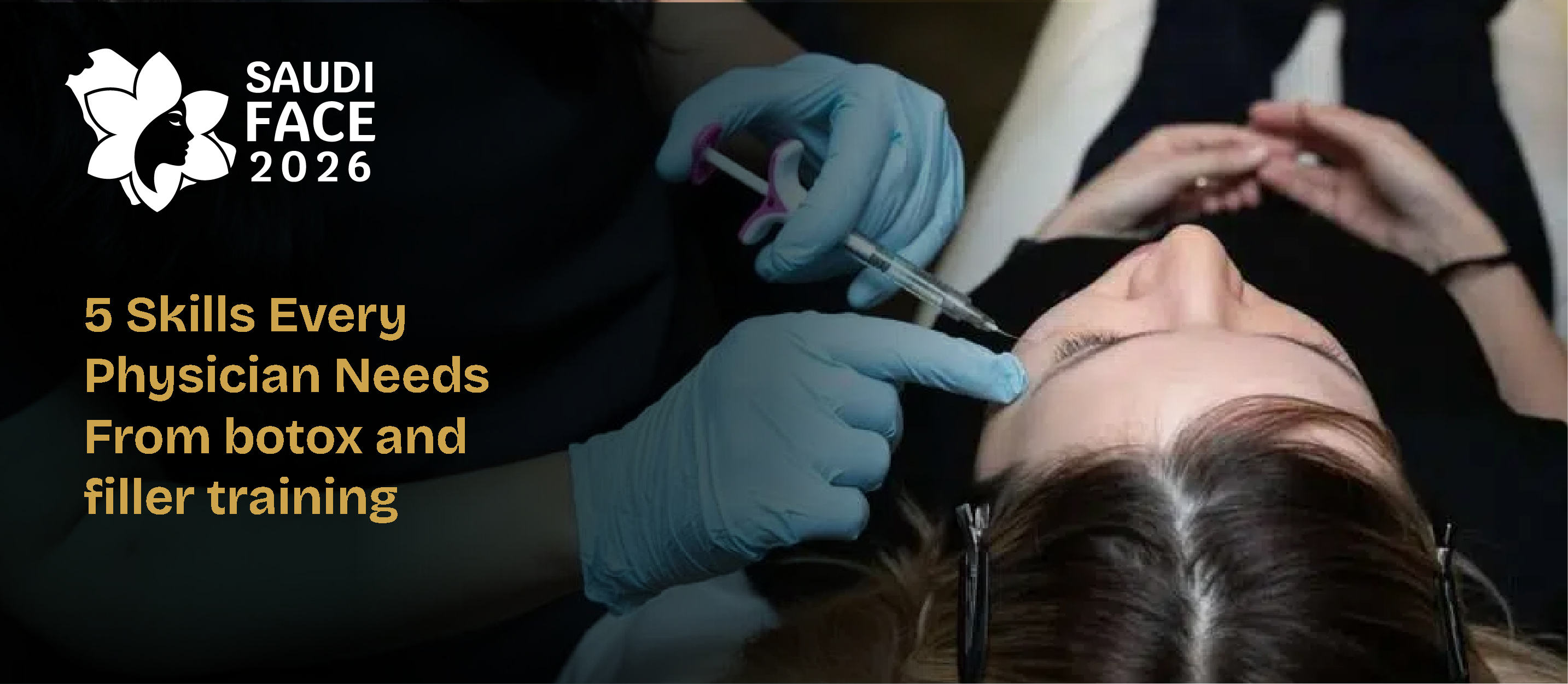
The demand for aesthetic treatments continues to grow, making Botox and filler training more important than ever for physicians who want to deliver safe, natural-looking results. Without proper education, even common injectable procedures can lead to complications, patient dissatisfaction, and missed opportunities for professional growth. This article explores the essential components of injectable education, the importance of certification, and why Saudi Face 2026 has become a leading destination for advanced aesthetic training in Saudi Arabia.
What Is Botox and Filler Training?
Botox and filler training is specialized medical education designed to help physicians safely and effectively perform injectable aesthetic procedures. These programs combine anatomy, patient assessment, injection techniques, complication management, and hands-on clinical practice.
As patient expectations continue to rise, technical knowledge alone is no longer enough. Physicians must understand facial anatomy in three dimensions, evaluate individual facial proportions, and create treatment plans that prioritize both safety and aesthetic harmony.
According to current aesthetic medicine standards, a strong educational foundation significantly improves patient outcomes and reduces treatment-related risks. This is precisely why physicians increasingly seek structured botox training courses rather than relying solely on observational learning. Ultimately, successful injectable practice depends on much more than learning where to place a needle. It requires a thorough understanding of anatomy, artistry, and patient safety.
Learn more about Saudi Face 2026
Botox Training — Core Competencies Every Injecting Physician Must Develop
A successful injectable practitioner develops a combination of scientific expertise and practical skill. While many physicians enter aesthetic medicine with strong medical backgrounds, the best Botox training for physicians remains essential for mastering facial injections.
Here are the 5 core competencies every injecting physician must develop:
-
Facial Anatomy Mastery
Anatomy forms the foundation of every successful injectable procedure. Therefore, Physicians must understand facial muscles and their functions, nerve pathways, vascular structures, age-related anatomical changes, and high-risk injection zones. Without this knowledge, treatment outcomes become unpredictable, and complication risks increase significantly. Research consistently shows that the most significant predictor of complication rates in aesthetic injectables is not the product used; it is the injector's anatomical knowledge. That is the ultimate reality every physician considering Botox training courses must sit with.
-
Patient Assessment and Consultation Skills
Every face has its unique features. Before performing injections, physicians must evaluate facial symmetry, muscle activity, skin quality, volume loss patterns, and patient expectations. Strong consultation skills help physicians develop personalized treatment plans that align with realistic outcomes.
-
Precision Injection Techniques
Technical execution directly affects patient satisfaction. High-quality botox training courses teach physicians how to select appropriate injection points, determine correct dosage, maintain treatment symmetry, achieve natural facial movement, and minimise discomfort and downtime. These skills can only be refined through guided practice and expert supervision.
-
Complication Management
Even experienced injectors may encounter complications. Professional training ensures physicians know how to recognize and manage bruising, asymmetry, ptosis, vascular compromise, and allergic reactions. The ability to respond quickly and appropriately is a critical component of patient safety.
-
Ethical Clinical Practice
Modern aesthetic medicine requires responsible decision-making. Physicians must know when to treat, when to delay treatment, and when to decline a procedure entirely. Ethical judgment helps build patient trust and long-term professional credibility. For this reason, obtaining a recognized botox certification has become an increasingly important step for physicians entering aesthetic practice
Learn more: Saudi Face: The Leading Plastic Surgery Conference for Facial Aesthetics
Dermal Filler Course — What Physicians Need to Know Before Treating Patients
A well-structured dermal filler course goes far beyond learning injection techniques. It teaches physicians how to restore facial balance while preserving natural beauty. Unlike neuromodulators, fillers involve adding volume and reshaping facial contours. This creates unique anatomical and technical considerations.
Here is what physicians need to know before treating patients:
Understanding Facial Aging
One of the most important lessons in any quality dermal filler course is understanding how the face changes over time. Ageing affects bone structure, fat compartments, skin elasticity, and ligament support. Successful treatment requires addressing these changes strategically rather than simply filling isolated lines or wrinkles.
Considering Product Selection
Not all fillers are identical. Different products vary in elasticity, cohesiveness, longevity, and lifting capacity. Physicians must understand which products are most appropriate for specific treatment areas and patient goals.
Enhancing Product Safety
Vascular occlusion remains one of the most serious filler-related complications. This is why leading injectable education programs place significant emphasis on:
-
Vascular anatomy
-
Safe injection planes
-
Cannula versus needle techniques
-
Early complication recognition
-
Emergency management protocols
Comprehensive education helps physicians perform treatments with greater confidence and significantly improved safety.
Providing Hands-On Training
Reading textbooks and attending lectures provide valuable theoretical knowledge. However, practical experience remains essential. The most effective dermal filler course combines classroom instruction with supervised hands-on training, allowing physicians to apply concepts in realistic clinical settings. As a result, participants develop both competence and confidence before treating patients independently.
Meet the expert faculty and trainers
Botox and Filler Training Certification - How to Choose a Program That Advances Your Career
Selecting the right educational pathway can significantly influence your professional development. A reputable Botox and filler training certification program should provide more than a certificate. It should equip you with practical skills, evidence-based knowledge, and mentorship opportunities that support long-term success.
A genuine Botox and filler training certification should meet the following criteria:
-
Faculty credentials: Are the instructors active, certified specialists in facial plastic surgery, dermatology, or oculoplastics? The quality of instruction matters tremendously. Look for programs taught by board-certified specialists, internationally recognized injectors, experienced educators, and clinical experts with extensive case experience. Learning directly from respected leaders accelerates professional growth.
-
Hands-on Learning: The best programs offer cadaveric anatomy sessions, live patient injection under supervision, and structured feedback sessions. Lectures alone are absolutely inadequate. These elements bridge the gap between theory and real-world practice.
-
Curriculum depth: Does the program cover anatomy, pharmacology, patient selection, technique, and complication management in genuine detail? Or does it rush through slides to get to injection demonstrations? An effective Botox and filler training certification program should cover anatomy, treatment planning, injection technique, complication management, patient communication, and practice development. A broad curriculum prepares physicians for long-term success rather than short-term skill acquisition.
-
Ongoing support: Does the Botox certification include post-course mentorship, access to case consultations, or continuing learning resources?
-
Industry Recognition: Is the Botox certification recognized by relevant medical boards, aesthetic societies, or continuing medical education bodies in your region? A respected Botox certification enhances professional credibility and demonstrates commitment to clinical excellence. Patients increasingly seek practitioners who have completed recognized educational programs and continue investing in advanced training.
Read more: Facial Aesthetics Courses in Riyadh | Injectable Training, Surgical Education
Saudi Face Plastic Surgery Conference - The Premier Botox and Filler Training Conference in Saudi Arabia
-
According to industry reports, the global medical aesthetics market continues to experience strong annual growth, reflecting rising demand for advanced aesthetic procedures and practitioner education.
-
Saudi Face 2026 stands at the forefront of this evolution by bringing together internationally recognized experts in facial aesthetics, surgery, and injectables.
-
Through immersive anatomy-focused learning, live demonstrations, cadaveric education, and advanced injectable workshops, participants gain practical skills grounded in clinical excellence.
-
This commitment to education, expertise, authority, and trust makes Saudi Face a leading destination for aesthetic professionals across the region.
FAQs
What is the purpose of botox and filler training?
It teaches physicians safe injection techniques, facial anatomy, patient assessment, and complication management.
Is a botox certification important?
Yes. A recognized botox certification demonstrates professional commitment to patient safety and clinical excellence.
Who should attend a dermal filler course?
Licensed physicians interested in aesthetic medicine, facial rejuvenation, and injectable treatments can benefit from a structured dermal filler course.
.png)
.png)
.png)
.png)
