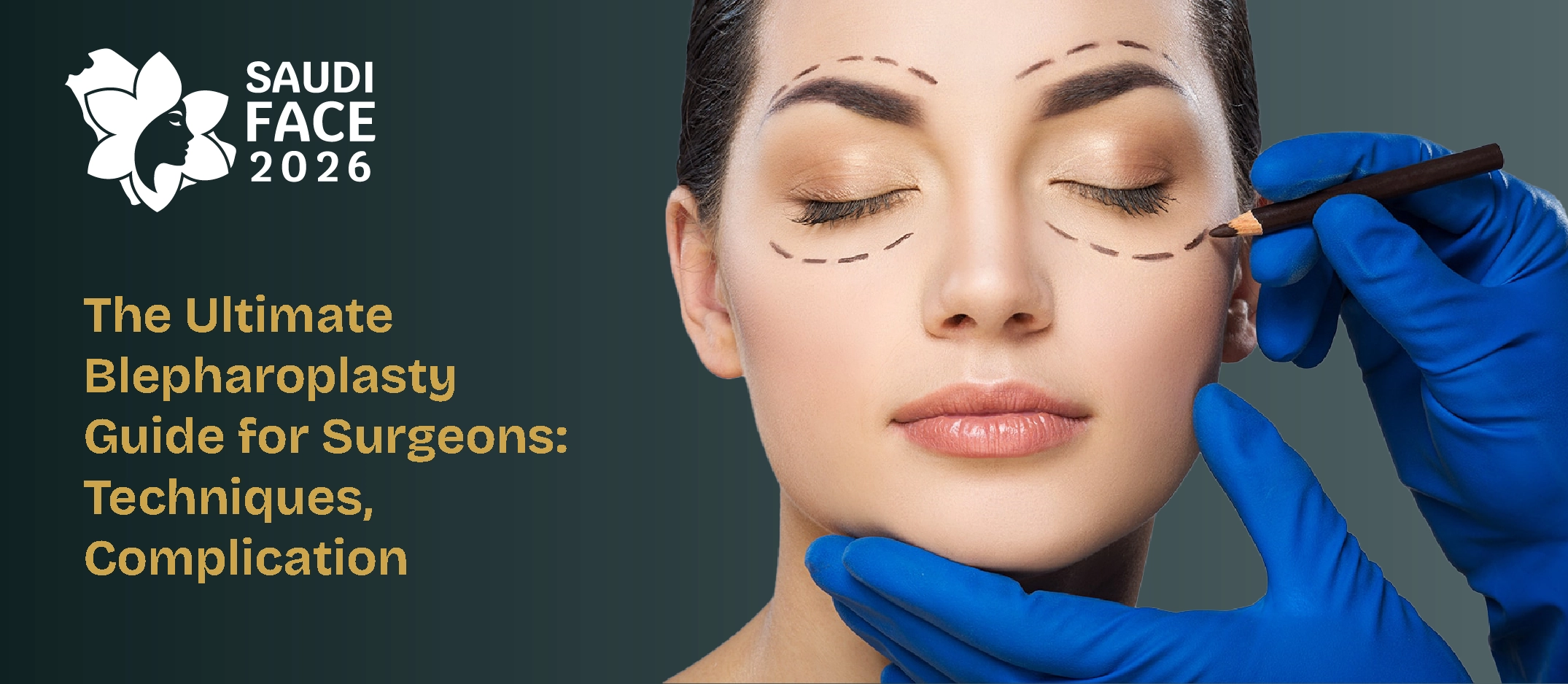
Blepharoplasty is one of the most refined procedures in aesthetic and reconstructive surgery, requiring precision and anatomical expertise. This guide explores Blepharoplasty techniques, outcomes, complications, and recovery protocols, while also highlighting clinical considerations for surgeons seeking to improve blepharoplasty before and after results and optimize patient safety and satisfaction outcomes.
What Is Blepharoplasty?
Blepharoplasty is a surgical procedure designed to correct deformities, defects, and aesthetic concerns of the eyelids. It may involve removing excess skin, fat repositioning, or muscle tightening in both upper and lower eyelids. Surgeons perform blepharoplasty to improve visual function and facial aesthetics simultaneously.
In clinical practice, lower blepharoplasty is often performed to address under-eye bags, fat herniation, and skin laxity. Upper eyelid procedures are commonly used to correct dermatochalasis that may impair vision or create a fatigued appearance.
Understanding patient expectations, anatomy, and surgical limitations is critical for achieving optimal blepharoplasty before and after outcomes and minimizing blepharoplasty complications.
Learn more about Saudi Face 2026
The Difference Between Lower Blepharoplasty and Upper Blepharoplasty
|
Feature |
Upper Blepharoplasty |
Lower Blepharoplasty |
|
Primary Goal |
Remove excess skin and improve vision |
Reduce under-eye bags and rejuvenate contour |
|
Target Area |
Upper eyelid skin and muscle |
Fat pads, tear trough, lower lid skin |
|
Technique |
Skin excision, muscle adjustment |
Fat repositioning, transconjunctival or transcutaneous approach |
|
Scarring |
Hidden in eyelid crease |
Minimal or internal depending on technique |
|
Recovery Time |
Shorter blepharoplasty recovery time |
Slightly longer blepharoplasty recovery |
|
Common Issues |
Lid retraction, asymmetry |
Ectropion, swelling, contour irregularities |
Both procedures require individualized planning by the best blepharoplasty surgeon to minimize complications and ensure balanced blepharoplasty before and after results.
Learn more: Saudi Face: The Leading Plastic Surgery Conference for Facial Aesthetics
Blepharoplasty Before and After – What Surgeons Should Evaluate
|
Evaluation Stage |
Key Clinical Considerations |
Surgical Relevance |
|
Pre-operative Assessment |
Skin laxity, fat distribution, orbital structure |
Determines surgical approach |
|
Facial Symmetry |
Eyelid height and contour differences |
Prevents post-op asymmetry |
|
Patient Expectations |
Aesthetic goals vs realistic outcomes |
Reduces dissatisfaction |
|
Skin Quality |
Elasticity and pigmentation |
Influences healing |
|
Tear Trough Depth |
Volume loss or fat excess |
Guides lower blepharoplasty planning |
|
Medical History |
Dry eye, thyroid disease |
Impacts complication risk |
Successful blepharoplasty before and after transformation depends heavily on preoperative planning. Surgeons must balance functional improvement with aesthetic refinement while minimizing blepharoplasty side effects.
Meet the expert faculty and trainers
Blepharoplasty Recovery Time – Evidence-Based Post-Operative Protocols
-
Initial swelling and bruising typically peak within 48–72 hours
-
Early cold compress application reduces inflammation and improves blepharoplasty recovery time
-
Sutures are usually removed within 5–7 days (for external incisions)
-
Most patients resume light activity within 7–10 days
-
Full blepharoplasty recovery may take 4–6 weeks depending on individual healing
-
Sun protection is essential to reduce pigmentation changes and improve blepharoplasty before and after results
-
Lubricating eye drops are recommended to prevent dryness after lower blepharoplasty
-
Avoid strenuous activity for at least 2–3 weeks to prevent complications
Proper post-operative care significantly reduces blepharoplasty complications and improves outcomes.
Read more: Facial Aesthetics Courses in Riyadh | Injectable Training, Surgical Education
Blepharoplasty Side Effects – Managing Patient Expectations and Clinical Sequelae
Blepharoplasty is generally safe when performed by an experienced surgeon, but blepharoplasty side effects may still occur.
Common side effects include:
-
Temporary swelling and bruising
-
Dry eyes or irritation
-
Mild asymmetry during early healing
-
Tightness or discomfort in eyelids
Possible blepharoplasty complications include:
-
Hematoma formation
-
Infection
-
Ectropion (especially in lower blepharoplasty)
-
Scarring irregularities
-
Overcorrection or undercorrection
Managing patient expectations is critical. Patients often reference blepharoplasty before and after images without understanding variability in healing and anatomy. Clear communication reduces dissatisfaction and improves perception of results, regardless of blepharoplasty cost or clinic setting.
Learn more: 5 Skills Every Physician Needs From botox and filler training
Saudi Face 2026 – The Premier Blepharoplasty Conference in Saudi Arabia
Saudi Face 2026 brings together specialists in facial plastic surgery, ophthalmic surgery, and aesthetic medicine to discuss advancements in eyelid surgery.
The conference focuses on:
-
Surgical refinement techniques in blepharoplasty
-
Management of blepharoplasty complications
-
Innovations in lower blepharoplasty approaches
-
Analysis of blepharoplasty before and after outcomes
-
Updates on patient safety protocols and recovery optimization
It serves as a platform for knowledge exchange, clinical case discussions, and evidence-based improvements in blepharoplasty recovery time and surgical outcomes.
Blepharoplasty remains a cornerstone of facial aesthetic surgery. With proper planning, technique selection, and postoperative care, surgeons can significantly improve outcomes while minimizing risks and ensuring consistent patient satisfaction.
FAQs
How long does blepharoplasty recovery take?
The average blepharoplasty recovery time ranges from 1–2 weeks for initial healing, while complete recovery may take 4–6 weeks depending on whether upper or lower blepharoplasty was performed.
What are the side effects and complications of blepharoplasty?
Common blepharoplasty side effects include swelling, bruising, and dryness. More serious blepharoplasty complications may include infection, asymmetry, or eyelid malposition.
What is the difference between upper and lower blepharoplasty?
Upper blepharoplasty focuses on removing excess skin from the upper eyelid, while lower blepharoplasty addresses fat herniation, under-eye bags, and contour irregularities. Both procedures aim to improve blepharoplasty before and after outcomes.
.png)
.png)
.png)
.png)
