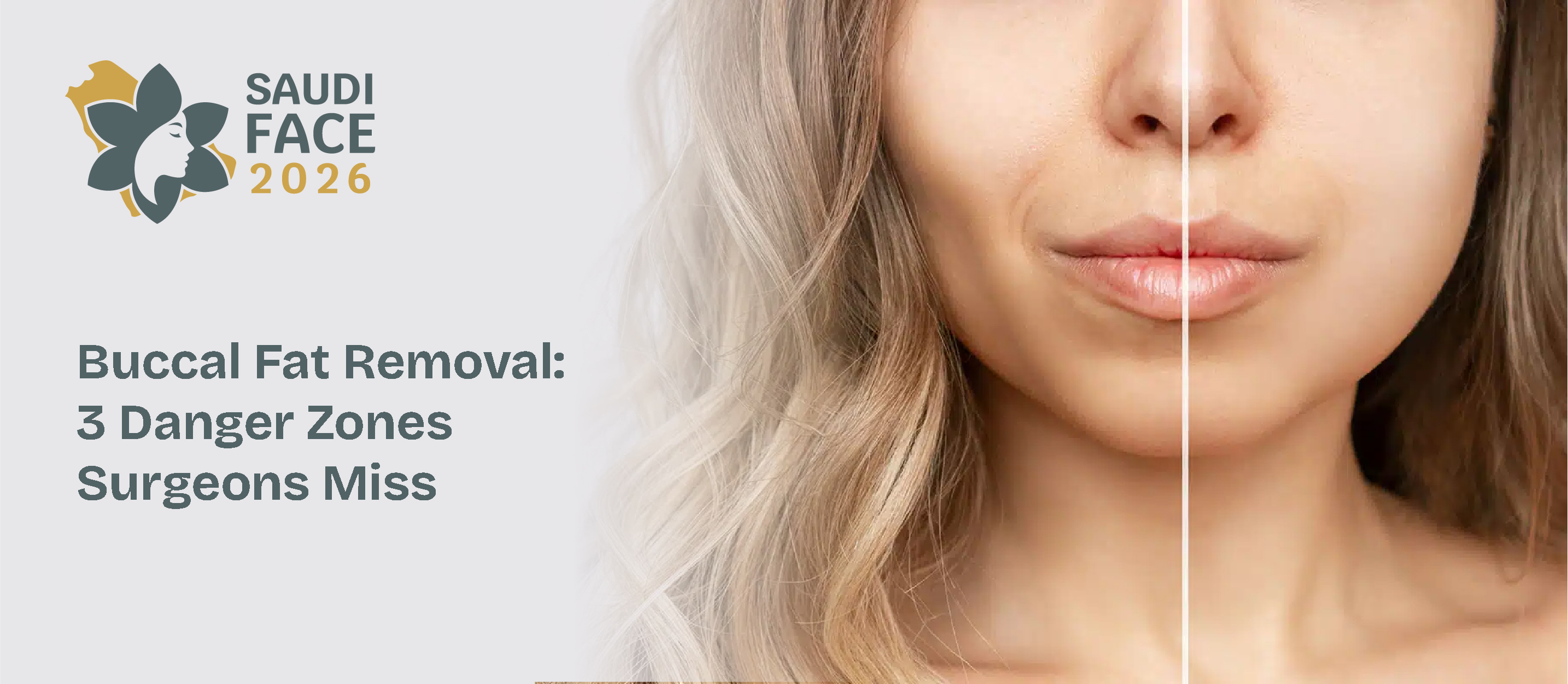
Buccal fat removal is one of the most technically precise facial contouring procedures in aesthetic surgery today. If you're a surgeon looking to master it, you're in exactly the right place. Overly full cheeks can undermine even the most balanced facial features, and patients are increasingly seeking targeted solutions. This guide walks you through everything you need to know: the anatomy, the technique, the recovery, and where Saudi Arabia fits into the global conversation on facial refinement.
What Is Buccal Fat Removal?
Buccal fat removal is a specialized facial contouring procedure designed to reduce fullness in the lower cheeks by excising part of the buccal fat pad. If you are wondering why some faces appear naturally rounded despite weight loss, the answer often lies in this deep anatomical fat compartment.
From a clinical perspective, facial buccal fat removal targets the buccal fat pad located between facial muscles, contributing to mid-face volume and contour balance. According to facial plastic surgery literature, selective reduction enhances cheek hollowing and improves definition along the cheekbone line.
You might ask: Is this just a cosmetic trend? Absolutely not. It is a structurally guided procedure grounded in facial anatomy and aesthetic proportion principles.
Key clinical goals include:
-
Enhancing mid-face definition
-
Reducing lower cheek fullness
-
Improving facial symmetry
-
Creating a more sculpted aesthetic profile
When performed correctly, buccal fat removal delivers a naturally contoured result rather than an over-sculpted or artificial look.
Learn more about Saudi Face 2026
Buccal Fat Pad Removal — Surgical Anatomy, Technique, and Danger Zones
Understanding the deep anatomy behind buccal fat pad removal is critical for predictable outcomes. The buccal fat pad is not superficial; it sits between the masseter and buccinator muscles and is intimately related to facial nerve branches.
During the buccal fat removal procedure, surgeons access the fat through a small intraoral incision. The fat is then carefully teased out in controlled amounts.
What makes this step extremely sensitive? The danger zones.
-
Facial nerve buccal branches
-
Parotid duct proximity
-
Over-resection risk leading to premature aging appearance
In modern facial plastic surgery, precision is everything. Surgeons today use conservative extraction techniques to avoid hollowing the mid-face excessively.
You should know this clearly: excessive removal leads to long-term contour irregularities. Therefore, controlled excision is the gold standard in buccal fat pad removal, ensuring balance rather than drastic reduction.
Learn more: Saudi Face: The Leading Plastic Surgery Conference for Facial Aesthetics
Buccal Fat Removal Recovery — Evidence-Based Post-Operative Protocols for Surgeons
Buccal fat removal recovery is generally well-tolerated, but your patients will absolutely benefit from a structured, evidence-based post-operative protocol. Setting correct expectations from day one determines both patient satisfaction and complication avoidance.
Recovery Timeline
|
Phase |
Timeframe |
Key Milestones |
|
Immediate post-op |
0–48 hours |
Swelling peaks, soft diet, ice application |
|
Early recovery |
Days 3–7 |
Swelling reduction begins, suture check |
|
Intermediate |
Weeks 2–4 |
Majority of edema resolves, contour emerges |
|
Final result |
3–6 months |
Full fat pad settling, final aesthetic outcome visible |
Evidence-Based Protocol Points
-
Diet: Liquid to soft diet for the first 7–10 days; avoid hard, crunchy foods that stress the buccinator
-
Oral hygiene: Chlorhexidine rinses after every meal, definitely twice daily, for the first two weeks to minimize intraoral bacterial load
-
Activity restriction: No strenuous exercise for 2 weeks; avoid anything that dramatically elevates blood pressure
-
Swelling management: Cold compresses for 48 hours; bromelain supplementation has shown promise in accelerating oedema resolution
-
Follow-up schedule: Day 5–7 for suture check, Week 3 for oedema assessment, Month 3 and Month 6 for final outcome documentation
Explore the full Saudi Face 2026 agenda and workshop schedule
Buccal Fat Removal Complications — Recognition, Prevention, and Surgical Management
Every surgeon performing buccal fat removal must be fluent in complication recognition and management. Rare does not mean impossible, and preparedness is what separates good surgeons from great ones.
Complication Profile
Intraoperative complications:
-
Parotid duct injury: Immediately recognized by clear fluid in the wound; requires primary repair over a stent
-
Facial nerve injury: Avoid aggressive retraction; if a branch is transected, microsurgical repair is indicated
-
Arterial bleeding: Meticulous hemostasis prevents hematoma; always have bipolar available
Post-operative complications:
-
Hematoma: Presents within 24–48 hours with asymmetric swelling and pain; requires surgical evacuation if expanding
-
Infection: Uncommon given intraoral flora, but abscess formation requires drainage and antibiotics
-
Asymmetry: The most common aesthetic complaint; prevention relies on bilateral symmetric resection volumes
Long-term considerations:
-
Midface hollowing: Patients who undergo the procedure in their 20s may experience premature mid-face aging as natural facial fat atrophies with age; careful patient selection is essential
-
Undercorrection: Managed with revision lipectomy if adequate time (6+ months) has passed
-
Overcorrection: Requires autologous fat grafting; technically demanding and carries its own recovery
Read more: Facial Aesthetics Courses in Riyadh | Injectable Training, Surgical Education
Buccal Fat Removal Before and After — Outcome Documentation for Surgeons
Visual documentation plays a crucial role in evaluating facial buccal fat removal results. Before-and-after imaging is not only cosmetic evidence but also a surgical performance indicator.
Standard assessment includes:
-
Standardized frontal and oblique photography
-
Consistent lighting and facial expression
-
Comparison of mid-face volume reduction
Patients often notice:
-
Sharper cheekbone visibility
-
Reduced lower cheek fullness
-
More defined jawline transition
However, results should always be subtle and proportional. Overdone results are considered a surgical failure in aesthetic standards. Clinically, buccal fat removal before and after analysis helps surgeons refine technique and improve long-term predictability.
Learn more: 5 Skills Every Physician Needs From botox and filler training
Saudi Face 2026 — The Premier Buccal Fat Removal and Facial Contouring Conference in Saudi Arabia
-
Over 2,500+ aesthetic surgeons globally are expected to attend Saudi Face 2026, highlighting Saudi Arabia’s rapid rise in facial plastic surgery excellence.
-
With live surgical demonstrations, 3D anatomical dissection sessions, and expert-led workshops, the event positions Riyadh as a global hub for advanced facial contouring innovation.
-
Saudi Face 2026 is where evidence-based aesthetic science meets surgical mastery. It absolutely redefines how buccal fat removal and facial contouring techniques are taught, discussed, and refined across international clinical communities.
FAQs
What are the key surgical steps in the buccal fat pad removal procedure?
The procedure involves intraoral incision, gentle dissection of the buccal fat pad, controlled extraction, and careful closure to avoid nerve or duct injury.
What is the typical buccal fat removal recovery timeline and what milestones should surgeons monitor?
Initial swelling reduces within 7–10 days, while final contour refinement appears within 6–8 weeks. Surgeons should monitor symmetry, swelling resolution, and oral healing.
Does facial buccal fat removal accelerate mid-face aging?
Yes, if over-performed. Excessive fat removal can reduce natural mid-face support, potentially leading to premature hollowing. Conservative techniques significantly minimize this risk.
.png)
.png)
.png)
.png)
